Free Lettings Valuation
Explore our letting solutions, from full management to guaranteed rent – starting with a free valuation.
Property Valuation
"*" indicates required fields


Keen to live in Dagenham, but wondering what properties you’ll find in the area? We can help.
From the substantial offering of post-war housing to older terraces, there are many excellent family homes to buy and rent across the area. In addition, many of these homes are cheaper than surrounding areas, and yet, they allow for excellent access to the centre of London.
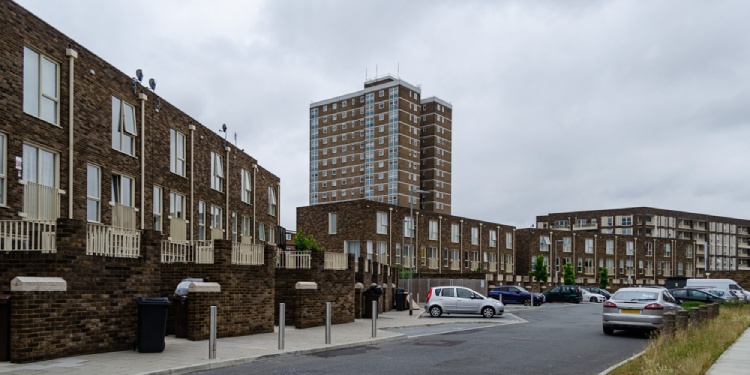
So, keep reading to find out the specifics about Dagenham property so you can pick the home that’s right for you.
Many buyers appreciate the space offered by Dagenham’s inter-war ex-council housing, but in fact, the area offers more variety than that. There are Victorian terraces, varied 20th Century estates, and a growing body of new build development reaching across the southern end of the borough. But what ties it all together is its scale – Dagenham doesn’t do things by halves.
The Becontree Estate, begun in the 1920s and completed in the early 1930s, was at the time the largest public housing scheme in the world. Its design philosophy prioritised light, air, and garden space – which is why so many homes have generous gardens that are so rare in London.
Many of those original houses have since passed into private ownership through the Right to Buy scheme, and today make up a lot of Dagenham’s owner-occupier market. Three-bedroom semi-detached and terraced houses here are also priced well below equivalent homes in Ilford or Romford.
The next phase of Dagenham’s architecture is also built to an ambitious design. Dagenham Green, Beam Park, and the wider London Riverside regeneration corridor are adding thousands of new homes, bringing a different kind of property to a market that has historically been almost entirely houses.
| Property Type | Typical Period | Typical Tenure | Approximate Price Range |
|---|---|---|---|
| Inter-war semi-detached (ex-council) | 1921–1935 | Freehold | £350,000–£475,000 |
| Inter-war terraced (ex-council) | 1921–1935 | Freehold | £320,000–£430,000 |
| Victorian terraced | 1880–1905 | Freehold | £300,000–£400,000 |
| Purpose-built / converted flats | Varies | Leasehold | £180,000–£280,000 |
| New build (apartment / house) | 2015–present | Leasehold / Freehold | £250,000–£450,000+ |
The Becontree Estate accounts for the single largest block of housing in Dagenham, covering a vast area bounded roughly by the A1306 to the south, the District line to the north, and stretching west into Barking.
Built by the London County Council between 1921 and 1934, the estate originally comprised around 27,000 homes. The design was by George Topham Forrest, and the houses follow a consistent pattern of two-storey, brick-built, with hipped or gabled roofs, with front gardens set behind low walls or hedges, and deep back gardens. Many were built as parlour-type houses, meaning a front reception room separate from a back living room and kitchen – a layout that still works well for families today.
Right to Buy has now transferred a substantial proportion of the original stock into private ownership. These ex-council houses are the most commonly transacted property type in Dagenham, and they can represent good value for buyers willing to accept that original features are rarely intact. Preparing to find replacement windows, modernised kitchens, and altered interior layouts is generally the best strategy.
Older Victorian terraces are found closer to Dagenham Village and along the roads predating the Becontree development, like Church Lane, Crown Street, and the streets leading off Rainham Road North. These are typically two-up two-down or three-bedroom arrangements, built in yellow stock brick with slate roofs.
These are noticeably smaller in plot footprint than the Becontree houses, though some have been extended to the rear. While they’re less common than in neighbouring Barking or East Ham, they do come onto the market, and buyers who want a period feel without the premium of a conservation area postcode may want to pay attention.
Purpose-built flat blocks exist across Dagenham, including post-war local authority blocks that have passed into private ownership and smaller purpose-built blocks from the 1970s and 1980s. Converted flats within the older Victorian and Edwardian terrace stock are less common here than in Ilford or Stratford, though they do exist. Buyers considering leasehold flats in the older blocks should pay close attention to service charges, cladding status, and lease lengths, all of which vary significantly across the stock.
Dagenham’s new build market has expanded significantly since 2015, concentrated in the London Riverside corridor. Beam Park and Dagenham Green are the two most prominent schemes. These developments include a mix of apartments and terraced houses, generally built to modern energy efficiency standards, and aimed at first-time buyers and investors. They represent a distinct product type from the rest of Dagenham’s stock: lower running costs, higher service charges, and a leasehold structure for the flat element.
Dagenham has one designated conservation area of particular note for buyers, the Dagenham Village Conservation Area, centred on the historic core of the old village around St Peter and St Paul’s Church. The conservation area designation protects the character of this part of Dagenham, which predates the 20th Century expansion entirely by some way.
Its historic buildings including St Peter and St Paul’s Church itself is a Grade I listed building, one of the oldest churches in Essex, with fabric dating to the 12th Century, several older cottages, and the Cross Keys pub, which dates back to the 15th Century.
Within a conservation area, permitted development rights are curtailed and buyers need to take care. Owners generally cannot demolish buildings, make significant alterations to the external appearance, or install certain types of windows and cladding without first obtaining conservation area consent from the London Borough of Barking and Dagenham. Buyers should confirm the designation and any Article 4 directions with the council’s planning department before making an offer, since these affect what alterations are permissible without a formal application.
The key thing to understand about Becontree-era houses is that they were built well for their time, but the decades since have been uneven. Many have been significantly altered and it’s usual to encounter UPVC windows, loft conversions and rear extensions. That said, buyers may find doors, fireplaces, and tiled paths that hark back to the past.
Dagenham’s Victorian terraces are less ornate than their Ilford or Forest Gate counterparts. They were built as working-class housing and the detailing reflects that in minimal decorative brickwork, simple door surrounds, and functional layouts. That’s all part of the appeal for buyers who want a period property yet don’t want the premium added by decorative features.
The new build stock at Beam Park and Dagenham Green can offer lower running costs, but service charges can be substantial, and the leasehold structure for flats requires careful scrutiny before exchange.
Dagenham Green and Beam Park are impossible to overlook in Dagenham’s current development landscape.
Dagenham Green occupies the 45-acre former Ford Stamping and Tooling site adjacent to Dagenham Dock station. The masterplan proposes a new neighbourhood of several thousand homes alongside commercial and community uses. The site’s proximity to Dagenham Dock station, which sits on the c2c line connecting to Fenchurch Street, is central to its appeal: the journey to central London takes around 21 minutes. Construction is phased and ongoing, with early phases already delivering completed units.
Beam Park sits on the boundary between Dagenham and Rainham, developed by Countryside and L&Q. It is one of the larger residential schemes in the London Riverside area and forms part of the wider programme that is projected to deliver 44,000 homes across the corridor over approximately 22 years. As of 2025, 8,087 homes had been completed within the broader London Riverside programme. Beam Park includes a mix of social rented, shared ownership, and private sale units, with a primary school and community facilities forming part of the wider scheme.
Dagenham Heathway is a further growth area identified in the council’s planning framework, with indicative capacity for around 1,000 new homes alongside a repositioned retail and leisure offer for the town centre. This is at an earlier stage than Dagenham Green and Beam Park, and buyers should treat it as a medium-term prospect rather than an imminent change to the immediate streetscape.
The volume of new development in Dagenham should give buyers pause for consideration. Anyone purchasing in the southern part of the borough should check the local development plan, since the area around Dagenham Dock and Beam Park will be effectively transformed in five to ten years’ time.
Outside space is one of Dagenham’s overwhelming strengths as a place to buy. The Becontree Estate was designed with gardens as a core component of the housing offer, and the typical inter-war house in Dagenham comes with a front garden of a few metres and a well-sized rear garden too. This is considerably more than buyers would find in equivalent-priced stock in Stratford, Barking town centre, or East Ham. Victorian terraces in the older parts of Dagenham may have smaller rear yards or gardens. Meanwhile, their front gardens that have frequently been paved for bin storage or a small seating area.
New build houses at Beam Park and Dagenham Green include private gardens, though these are typically smaller than the inter-war estates provide. Apartments within the new build schemes rely on communal spaces, though some do incorporate private balconies or terraces. Buyers of new build flats should check what communal outdoor space is provided, who manages it and what the associated costs are, before committing.
Off-street parking is common across Becontree, where many houses have had their front gardens-paved to accommodate a car. Note though, this is a modification that requires permitted development compliance.
Dagenham’s dominant property types, inter-war solid wall houses and older Victorian terraces, present certain survey considerations that buyers should understand before instructing a solicitor.
As a rule of thumb, every buyer purchasing a period or converted property in Dagenham should commission a full RICS Level 2 or Level 3 Building Survey before exchange of contracts. Though a little more costly, it can save expensive discoveries later.
Dagenham offers a pleasant combination of generous plot sizes and accessible prices, with the rapidly changing southern landscape attracting a new wave of attention. Whether you’re buying a family home on the Becontree Estate or assessing one of the new build schemes near Dagenham Dock, understanding the property stock before you make an offer is the difference between a straightforward purchase and an expensive surprise. If you’re ready to start your search, register as a buyer with Lint Group or search properties to discuss what’s currently available.
Dagenham’s property market is led by inter-war semi-detached and terraced houses built as part of the Becontree Estate between 1921 and 1934, which have since passed into private ownership through Right to Buy. Victorian terraces do exist in smaller numbers around the older village streets, and a growing supply of new build apartments and houses is emerging in the south of the borough at schemes such as Beam Park and Dagenham Green.
Yes. The Dagenham Village Conservation Area covers the historic core around St Peter and St Paul’s Church, protecting the character of one of the oldest parts of the area. Within the conservation area, permitted development rights are restricted, meaning that certain external alterations require planning consent from the London Borough of Barking and Dagenham.
The majority of Dagenham’s housing stock, particularly the inter-war houses on and around the Becontree Estate, is freehold. Leasehold tenure is most common in purpose-built flats and new build apartment schemes. Buyers of new build properties should scrutinise lease terms very carefully, including their ground rent clauses and service charge histories.
The most important checks for Dagenham’s inter-war and Victorian stock relate to solid wall damp, chimney and flat roof extension condition, electrical systems, and drainage. A full RICS Level 2 or Level 3 Building Survey is strongly recommended before exchange. Buyers in the southern part of the borough should also confirm the property’s flood zone with the Environment Agency.
Yes. Significant new build developments are underway in the south of Dagenham, primarily at Beam Park and Dagenham Green, with a further growth area identified at Dagenham Heathway. These schemes offer a mix of private sale, shared ownership, and social rented homes, with good transport links to central London via Dagenham Dock station on the c2c line.
Explore our letting solutions, from full management to guaranteed rent – starting with a free valuation.
"*" indicates required fields
Want to discuss something more specific?
Contact us, and we will be more than happy to help you.
"*" indicates required fields

Two streets in Dagenham can share the same postcode yet differ in price. Knowing which side of that gap you're on could be the most valua...
Dagenham has a reputation that doesn't quite match reality - and for buyers, that gap represents opportunity. Sitting less than twelve mi...

Is This E7 Neighbourhood Worth Your Attention? Fast Elizabeth line connections to Liverpool Street in around 12 minutes, Victorian terra...


